Source qfn24 ethernet ic chip for IoT, Networking, and Gateways
Find and compare 30 available qfn24 ethernet ic chip options from verified suppliers. Buyers can review specifications, pricing, and lead times for applications in IoT devices, networking equipment, and industrial gateways.
Key considerations
Products List


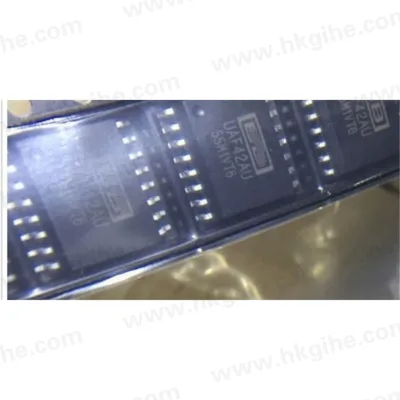


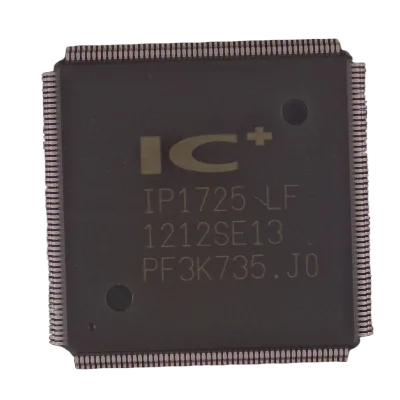
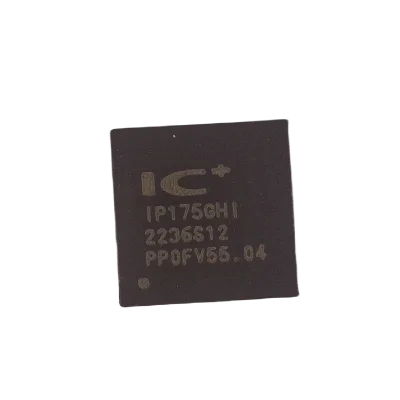


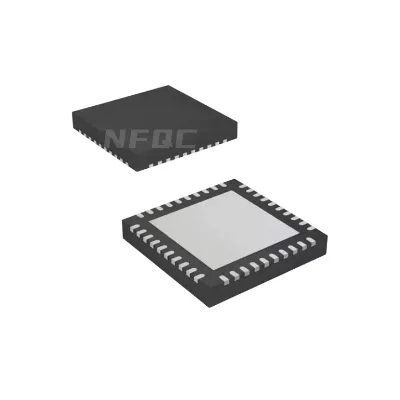
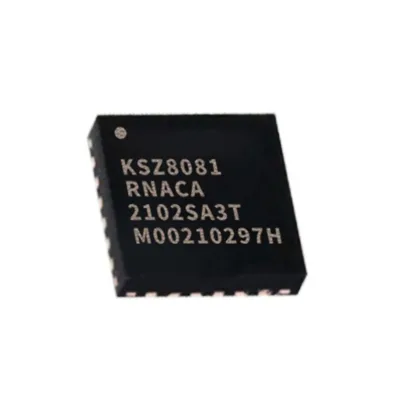


Comprehensive Sourcing Guide
Strategic Sourcing Guide for QFN24 Ethernet IC Chips
Navigating the procurement landscape for specialized integrated circuits, particularly those formatted in the QFN24 (Quad Flat No-leads) package with Ethernet functionality, requires a disciplined approach that balances technical precision with supply chain reliability. Buyers entering this market must distinguish between generic semiconductor offerings and components specifically engineered for high-speed data transmission and network integration. The following guide outlines the critical factors for sourcing these chips, drawing on observed industry attributes and standard verification protocols to ensure a robust procurement strategy.
Technical Specifications and Package Architecture
The foundation of a successful sourcing campaign lies in a rigorous understanding of the physical and electrical specifications of the target component. The QFN24 package is a surface-mount device characterized by a flat, compact footprint with no protruding leads, designed to optimize space on Printed Circuit Boards (PCBs) while maintaining excellent thermal and electrical performance. When evaluating potential inventory, buyers must verify that the product matches the specific "Flat" shape and "QFN-24" case configuration, as variations in pin count or lead length can render a component incompatible with existing board designs.
Beyond the physical package, the electrical characteristics are paramount. Ethernet ICs typically operate within specific voltage ranges and temperature envelopes. While specific data sheets vary by manufacturer, standard industry observations indicate that these components often function within a supply voltage range of 2.7 V to 5.5 V, a range that ensures compatibility with common logic levels in embedded systems. The operating temperature is another critical constraint; reliable units are generally rated for an ambient range of -40℃ to 85℃, ensuring stability in both consumer and industrial environments.
The integration level of the chip is also a key differentiator. Ethernet controllers often fall under the category of "Unipolar Integrated Circuit" or "MSI" (Medium Scale Integration), depending on the complexity of the internal logic. Buyers should confirm that the component is classified under "Integrated Circuits" and specifically as a "Power Management Specialized - Pmic" or a dedicated "Type: Power Management IC" if the application involves complex power sequencing. The mounting type is almost exclusively "Surface Mount" or "SMT," requiring precise reflow soldering profiles during assembly. Verification of the "Product Completion Type" as "IC Chips" and the "Series" as "Electronic Components Circuits" helps ensure the item is a finished, functional unit ready for deployment rather than a raw die or sub-component.
Compliance, Certification, and Regulatory Standards
In the global semiconductor market, regulatory compliance is not merely a formality but a prerequisite for market access and product safety. Buyers must prioritize components that adhere to strict environmental and safety standards. A primary indicator of compliance is the "RoHS Status," which should be verified as "RoHS Compliant." This status confirms that the component is free from specific hazardous substances, such as lead, mercury, and cadmium, which are restricted in many jurisdictions.
Furthermore, the "Lead Free Status" is a critical attribute to confirm. The supply chain data indicates a preference for "Lead Free Pb" components, which aligns with global trends toward lead-free soldering processes. However, buyers must exercise caution and request official documentation, such as a Certificate of Conformance (CoC), to validate these claims rather than relying solely on supplier assertions. The "Quality" attribute often cited as "New Original 100%" serves as a baseline expectation, but it must be supported by traceability data.
For international trade, the "Invoice" provided by the supplier should be an "Original Invoice" to facilitate customs clearance and warranty claims. Additionally, the "Manufacturing Date Code" is essential for assessing the age of the inventory. A date code such as "2025+" suggests recent production, which is preferable for minimizing the risk of moisture damage or degradation associated with older stock. Buyers should also verify the "Package Status," looking for indicators like "Anti-Water" protection, which suggests the component has undergone moisture barrier packaging to prevent damage during transit and storage.
Cost Drivers and Pricing Dynamics
The pricing of QFN24 Ethernet IC chips is influenced by a complex matrix of factors, including market demand, supply chain disruptions, and the specific configuration of the component. The observed market data indicates a price range of 0.01 to 200 USD, a wide spectrum that reflects the diversity of products from generic commodity chips to specialized, high-performance controllers. This variance underscores the importance of defining exact requirements before soliciting quotes.
Several specific cost drivers impact the final price. The "MOQ" (Minimum Order Quantity) is a significant factor, with observed ranges spanning from 1 to 2000 units. Suppliers offering low MOQs, such as 1 unit, often charge a premium per unit to cover handling and logistics costs associated with small batches. Conversely, bulk orders at the higher end of the MOQ range typically benefit from economies of scale, reducing the unit cost. Buyers must balance their immediate inventory needs against the financial advantage of bulk purchasing.
The "Lead Time" is another critical cost driver. While some suppliers list "In Stock" availability with a "Delivery Time" of 3-5 days, others may have a "Lead Time" of 1-3 days for production or allocation. Components that are not in stock and require manufacturing or allocation from the original factory will incur longer lead times and potentially higher costs due to expedited shipping or allocation fees. The "Shipping Method" chosen also affects the total landed cost; options like "DHL," "UPS," "FedEx," "EMS," and "HK Post" vary in price and speed. Selecting a faster shipping method to mitigate production delays can significantly increase the overall procurement cost.
Typical Applications and Integration Scenarios
QFN24 Ethernet IC chips are versatile components designed for a wide array of applications, primarily centered around network connectivity in embedded systems. The "Application" field typically lists "PCB Circuits," indicating their use in the assembly of complex electronic boards. These chips are essential for enabling network communication in devices ranging from industrial automation controllers to consumer electronics and smart home devices.
The "Integration" attribute, often noted as "GSI" (Gate Scale Integration) or "MSI," suggests the chip's role in managing complex logic operations within a networked environment. The "Description" of "Power Management Specialized - Pmic" highlights the chip's ability to manage power distribution efficiently, a crucial function in battery-operated or energy-constrained devices. The "Operating Temperature" range of -40℃ to 85℃ makes these components suitable for harsh environments, such as automotive electronics, outdoor surveillance cameras, and industrial machinery.
When integrating these chips, the "Mounting Type" of "Surface Mount" dictates the assembly process. The "Package Size" of 10105 mm (or similar dimensions like 10X10X5 Cm for gross packaging) requires precise pick-and-place machinery and controlled reflow soldering profiles. The "Single Package Size" and "Package Gross Weight" of 0.100 Kg are relevant for logistics planning and inventory management. Buyers should also consider the "Service" capabilities of their supplier, such as the ability to "Provide One-Stop Bom Service," which can streamline the procurement of all necessary components for a complete PCB assembly.
Supplier Evaluation and Verification Protocols
Selecting the right supplier is as critical as selecting the right component. The "Payment" terms offered by suppliers, such as "Paypal," "Tt" (Telegraphic Transfer), "Western Union," "Trade Assurance," or "Bank Transfer," provide insight into the supplier's legitimacy and risk profile. "Trade Assurance" and established bank transfer methods are generally preferred for B2B transactions as they offer a layer of financial protection.
The "Shipping Term" is another vital consideration. Terms like "DAP" (Delivered at Place) or "DDP" (Delivered Duty Paid) define the responsibilities of the buyer and seller regarding customs duties and transportation risks. DDP terms are often preferred by buyers who wish to avoid unexpected costs and administrative burdens upon delivery. The "Shipping Method" options, including "DHL," "FedEx," "TNT," and "China Post," should be evaluated based on reliability and tracking capabilities.
Buyers must also verify the "Data Sheet" availability. A reputable supplier should be able to provide comprehensive technical documentation, often accessible by contacting specific representatives like "Christen Jin." The "Product Origin" is another key factor; while many components originate from "China" or specifically "Guangdong, China," buyers should verify the authenticity of the origin to ensure the components are genuine and not counterfeit. The "Package/Case" variations, such as "Qfn-64," "Qfn-48," or "Qfn-40," observed in the market, highlight the need for precise matching. A QFN24 chip must not be confused with a QFN-48 or QFN-64 variant, as pinouts and dimensions differ significantly.
Quality Control and Long-Term Procurement Considerations
Ensuring the long-term reliability of QFN24 Ethernet IC chips requires a robust quality control strategy. The "Warranty" period, often cited as "365 Days," is a standard benchmark for supplier confidence. However, buyers should seek warranties that extend beyond this baseline if the application is critical. The "Quality" attribute of "New Original 100%" must be validated through third-party testing or supplier guarantees.
The "prod_packing" methods, including "Tube," "Tray," "Tape," "Reel," "Bag," or "Box," play a crucial role in preventing physical damage and moisture absorption. Proper packaging is essential for maintaining the integrity of the "Lead Free" components during storage and transit. Buyers should inspect the "Package Status" for "Anti-Water" features and ensure that the "D/C" (Date Code) is clearly marked and recent.
For long-term procurement, buyers should consider the "Lead Time" stability. Components with a "Lead Time" of "In Stock" or "1-3 Days" offer greater supply chain resilience compared to those with longer production cycles. The "prod_standard" of "QFN-64" or "QFN-48" mentioned in the market data serves as a reminder to verify the exact standard for the specific QFN24 component required. Finally, the "Category" of "Integrated Circuits" and "Product Completion Type" of "IC Chips" should be consistently verified to ensure the procurement of functional, ready-to-use components rather than raw materials or sub-assemblies.
| Attribute Category | Key Verification Points | Recommended Standard |
|---|---|---|
| Package | Shape, Case Type, Pin Count | Flat, QFN-24, Surface Mount |
| Electrical | Voltage, Temperature, Integration | 2.7-5.5V, -40 to 85°C, MSI/GSI |
| Compliance | RoHS, Lead-Free, Origin | RoHS Compliant, Lead Free Pb, China |
| Logistics | Lead Time, Shipping, Payment | In Stock/1-3 Days, DDP/DAP, Trade Assurance |
| Quality | Warranty, Date Code, Packaging | 365 Days, 2025+, Anti-Water |
By adhering to these structured evaluation criteria, buyers can mitigate risks associated with counterfeit components, supply chain disruptions, and technical incompatibilities. The procurement of QFN24 Ethernet IC chips is a high-stakes endeavor that demands meticulous attention to detail, rigorous verification of specifications, and a strategic approach to supplier selection.
FAQs
What integration levels are available for QFN24 Ethernet IC chips?
Integration levels include GSI and MSI for these components. Buyers should verify the specific integration type matches their circuit design requirements before ordering.
Can I find QFN24 chips with RoHS compliance and lead-free status?
Yes, products are available with RoHS Compliant status and Lead Free Pb certification. These attributes ensure the components meet environmental safety standards for global markets.
How long is the lead time for in-stock QFN24 Ethernet ICs?
Lead times range from 1-3 days for production or allocation to immediate in-stock delivery. Some listings specify a delivery time of 3-5 days for shipping.
Which payment methods are accepted for purchasing these integrated circuits?
Accepted payment methods include PayPal, TT, Western Union, Trade Assurance, and Bank Transfer. Buyers can select the method that best suits their transaction security needs.
What packaging options are available for QFN24 semiconductor ICs?
Packaging options include Tube, Tray, Tape, Reel, Bag, or Box configurations. These formats often feature anti-water protection to ensure component integrity during transit.
Are customization services available for these power management ICs?
Customization is available for specific product requirements. Buyers should contact suppliers directly to discuss custom specifications for their unique application needs.
What is the warranty period for new original QFN24 chips?
A standard warranty of 365 Days is provided for new original components. This warranty covers quality assurance for the integrated circuits supplied.